Description
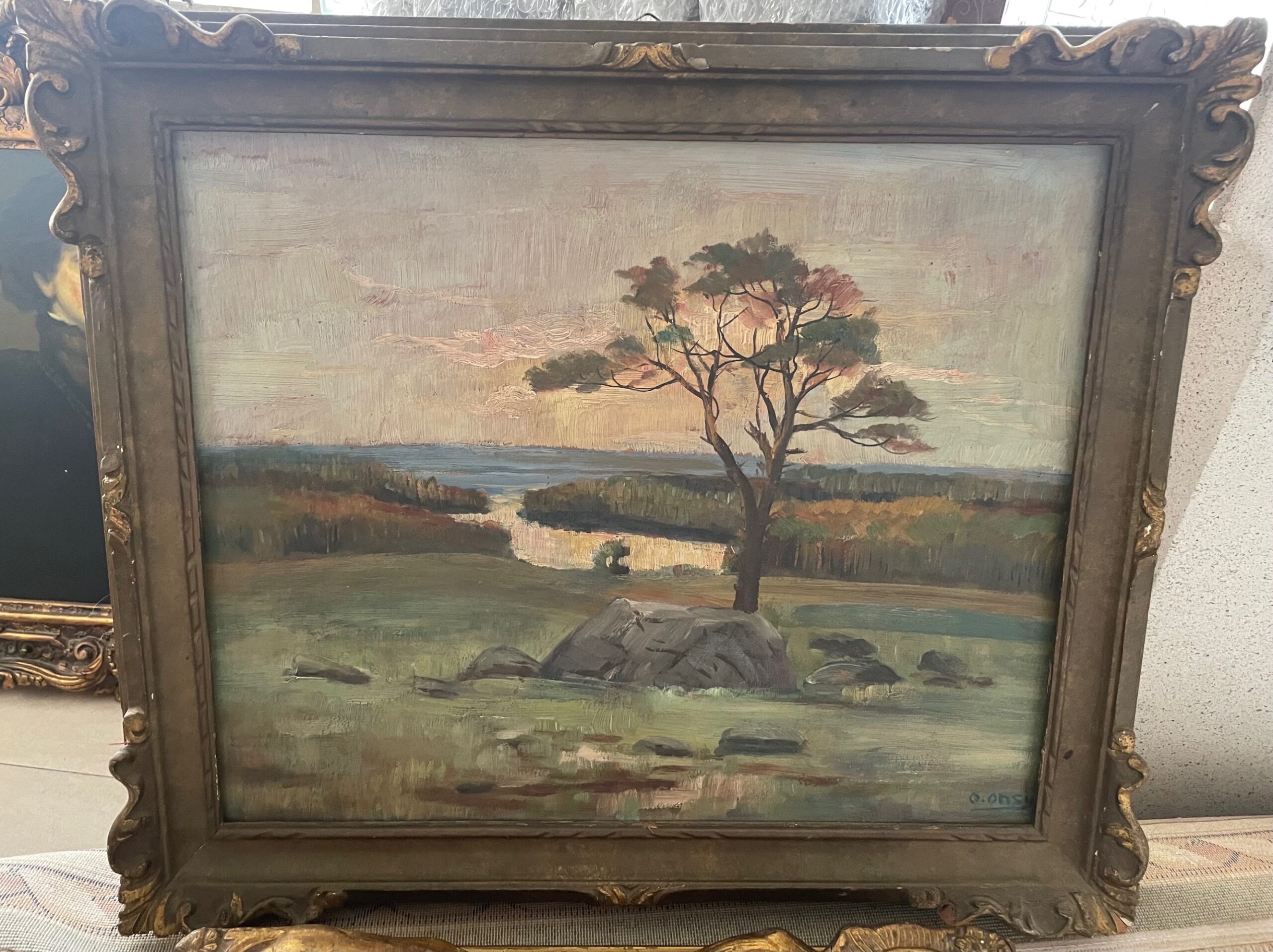
Omar Onsi, born in Tallet el Khayat, Beirut, in 1901, was introduced to art by his father, Abdel Rahman Onsi, a physician and painter. Initially pursuing medicine at the Syrian Protestant College, Onsi shifted to art under the mentorship of Khalil Saleeby, gaining early recognition with a silver medal at the Beirut International Fair in 1921.
In 1922, he taught art and English to Jordanian royals, painting portraits and Bedouin landscapes inspired by the desert’s contrast of sun, sand, and sky. Later, he studied at the Académie Julian in Paris, delving into the Barbizon and Fontainebleau movements. Returning to Beirut in 1930, Onsi painted Lebanese landscapes and urban scenes, establishing his reputation through exhibitions.
Onsi’s work, characterized by modest colors and delicate watercolors, reflected traditional themes and Lebanese life. He co-founded the Lebanese Association for Artists, Painters, and Sculptors in 1957 and joined the Sursock Museum board in 1960. He passed away in 1969, leaving a legacy of culturally rooted artistry.